

This article may not be reproduced in any form, print or digital, without express written permission from the author, David Allnutt. Copyright 2026.
by David Allnutt 2026
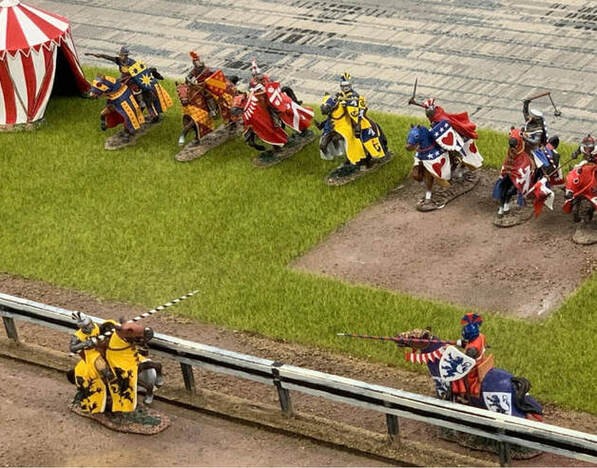
I play with soldiers for fun.
This is important context because it means I live in a house where the concept of normal surrendered long ago … at least according to our daughter. When you willingly spend an entire evening debating whether a 28mm cuirassier should have brass or steel buttons, you lose the right to judge anyone else’s hobbies.
I am married to a button collector. Not a casual one. Not an “oh, I keep a little tin of spares” collector. This is an archivist of fastening history. A woman who can identify a Victorian glass button at ten paces and who feels genuine joy when someone says, “These came off my great aunt’s coat.”
So here are my field notes recorded from the other side of the hobby table.
Observation One: Buttons are apparently alive
In miniatures, miniatures are inert until I animate them with dice and poor tactical decisions. Buttons, however, are sentient, at least according to my wife.
Buttons “want” to be displayed. Some “don’t like” being stored with buttons of a different material. Some spend a great deal of time in the “hospital .”
Observation Two: Scale is a universal language
We both speak scale, just different dialects.
I say, “This tank is 1:56, but the hatch is slightly oversized.”
She says, “This is a late 19th-century military button, but it’s a reproduction. See how the shank is wrong?”
We nod knowingly at each other, two scholars of completely incompatible, yet spiritually identical obsessions.
The real danger is collaboration.
I have caught myself holding a button up to a miniature and thinking. You know, that would make a great objective marker, and she has caught herself thinking, That galleon would look nice framed.
Observation Three: Storage is a moral battlefield
Wargaming teaches you that storage solutions are never final and you’re always needing more. Trays breed. Boxes multiply. Drawers fill mysteriously overnight.
We once had a heated debate over who needed more storage space. I confess I knew it was me … all that terrain. We settled on her having a dedicated room and me taking over the basement.
Observation Four: We both hoard history
I justify my purchases by saying. “I’m preserving history and educating myself.”
She does the same, except her artifacts are authentic, and mine are made of resin and regret.
Still, the instinct is the same: to rescue a small piece of the past and give it a safe home.
Observation Five: Mutual respect is earned through silence
The greatest sign of love in our house is not shared hobbies, it is respectful non-interference. She does not ask why I need another army when I already have one in green. I do not ask why she needs more moonglows.
We simply nod, get something to drink, and return to our magnifying glasses.
Final Observation: We are the same species
At the end of the day, a button collector’s husband who paints tiny soldiers is not a contradiction. We are both people who see value in the small, the overlooked, and the slightly absurd. We both know that joy can be measured in millimeters and that history doesn’t need to be big to be meaningful.
Also, we both know this: if society collapses, our household will not survive on practical skills, but by heavens, it will be beautifully curated.
This article may not be reproduced in any form, print or digital, without express written permission from the author, David Allnutt. Copyright 2026
