

by Jocelyn Howells
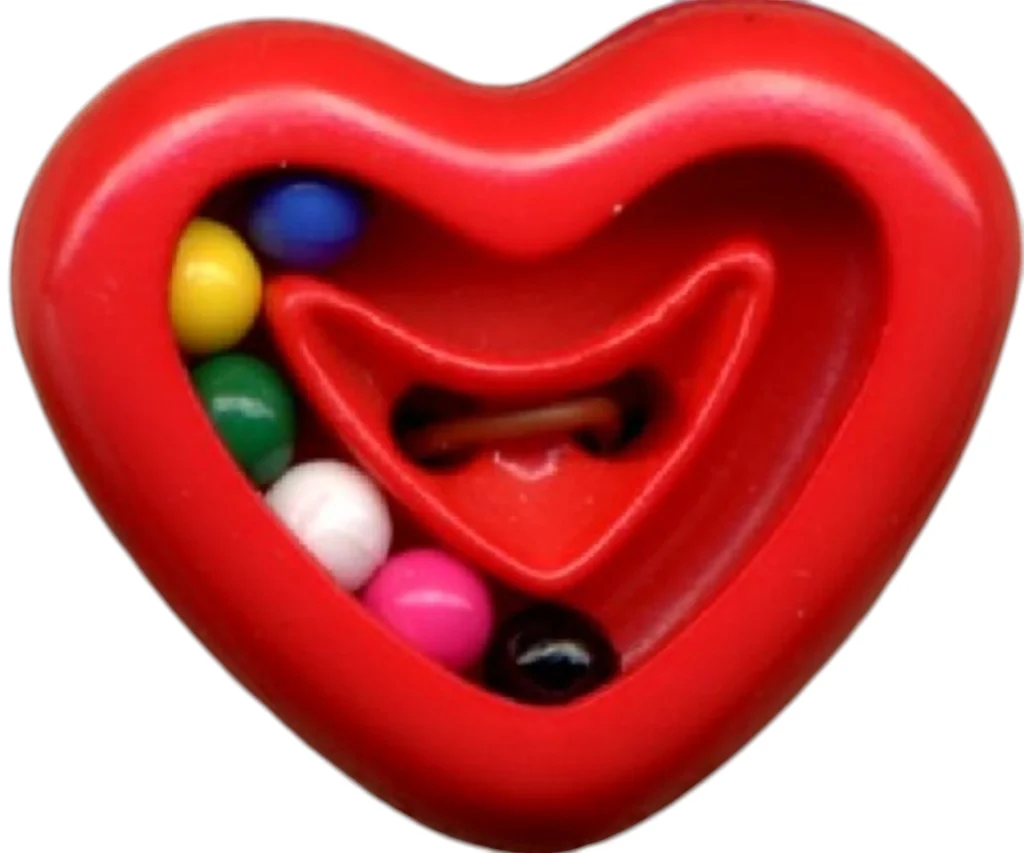
Button manufacturers have been very imaginative and clever with their creations. We recognize parts that move on buttons. Can we recognize additional aspects of buttons that DO something or have other interactive qualities?
OK, so what are we talking about? Not what buttons might do to us when we look at them. Let’s not consider the emotions that buttons can evoke in us. That would be us reacting to the buttons, such as:
–“Oooh how beautiful!”
–“Oh, isn’t that cuuuute—reminds me of a dress I had when I was a little girl; wonder whatever happened to its buttons—sniff-sniff.”
–“This was a gift from my late husband that I will take to my grave.”
–“Oooh, I’m so jealous I don’t have that one, too!”
–“Oh I wish I hadn’t let that one get away from me.”
You get what we mean?
Let’s consider what happens with a button when handled by us, such as: jiggle, dance, dangle, tinkle, rattle, twist, turn, screw open/shut, hide/hold objects, change image, change color, keep time or date, play games, move, wink, blink, make googly eyes, float, bend, vibrate, tremble, sift (sand), flutter, open/shut by hinge (compact, locket), glow in the dark/fluoresce, spin, reflect image, spring, dance, tip hat, brush, wiggle, tumble, walk, flex, slide, erase, rotate, motate, expand/contract, ring/clap, add/subtract, knock, detect lies, take temperature, make a puzzle, change parts, etc.
Let’s consider something that requires physical effort on our part to fully enjoy all aspects of the button.
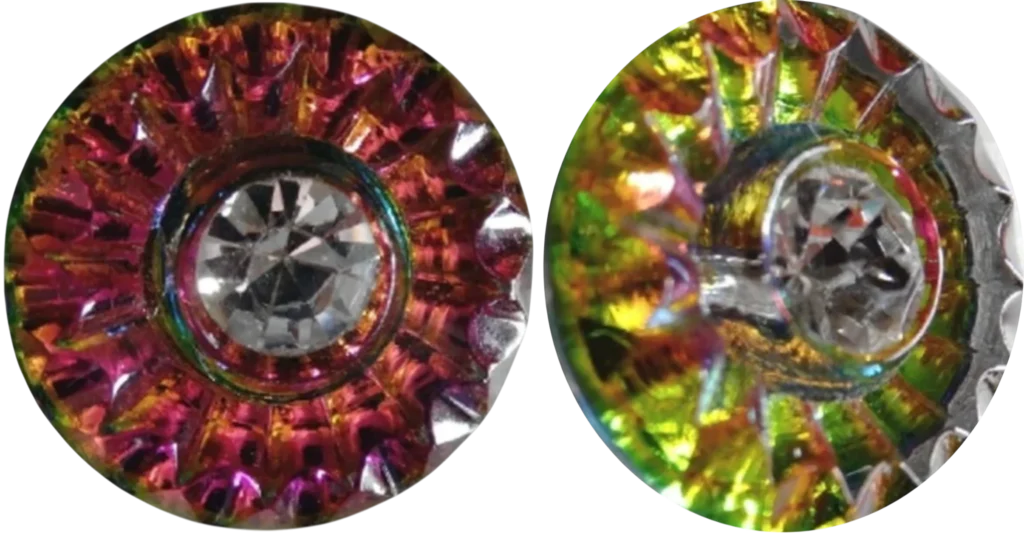
We have not included sparkle or twinkle, as they seem to manage just fine without our help, as long as there is sufficient light. Iridescent luster is a bit different, as some require movement in order to see all the colors—especially some of the vintage c.1950-60 examples—e.g., tipped one way, we see mostly gold; tipped another way, we see mostly purple.
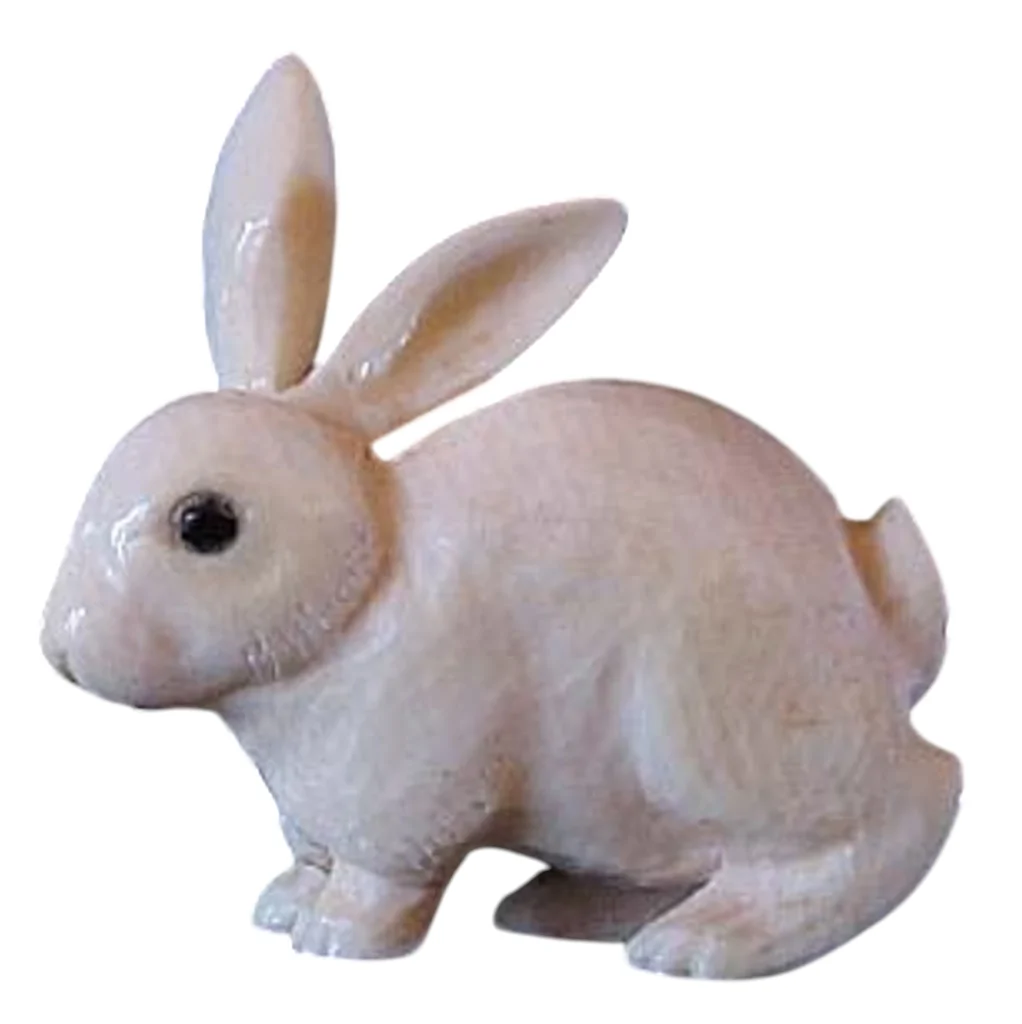
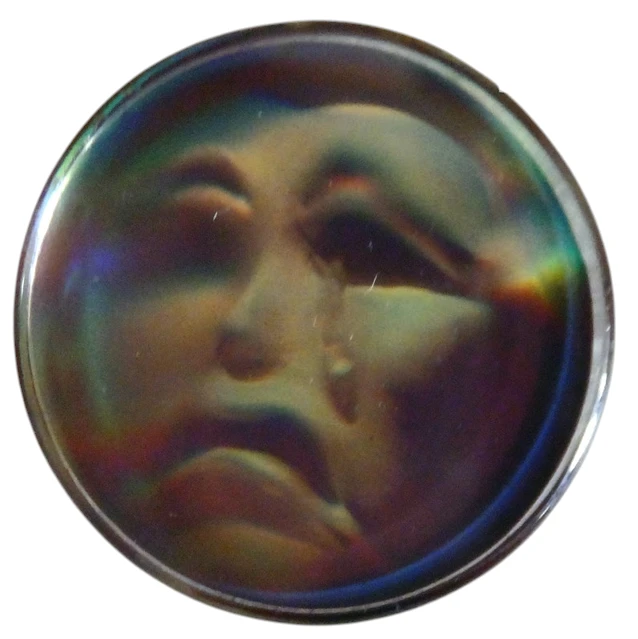
In the author’s collection, the most prevalent are dangling parts, followed by buttons that have flexible protruding parts, followed by buttons that call for manipulation of moving parts. There are more than enough examples to mount into a complete button card of just these three types alone.
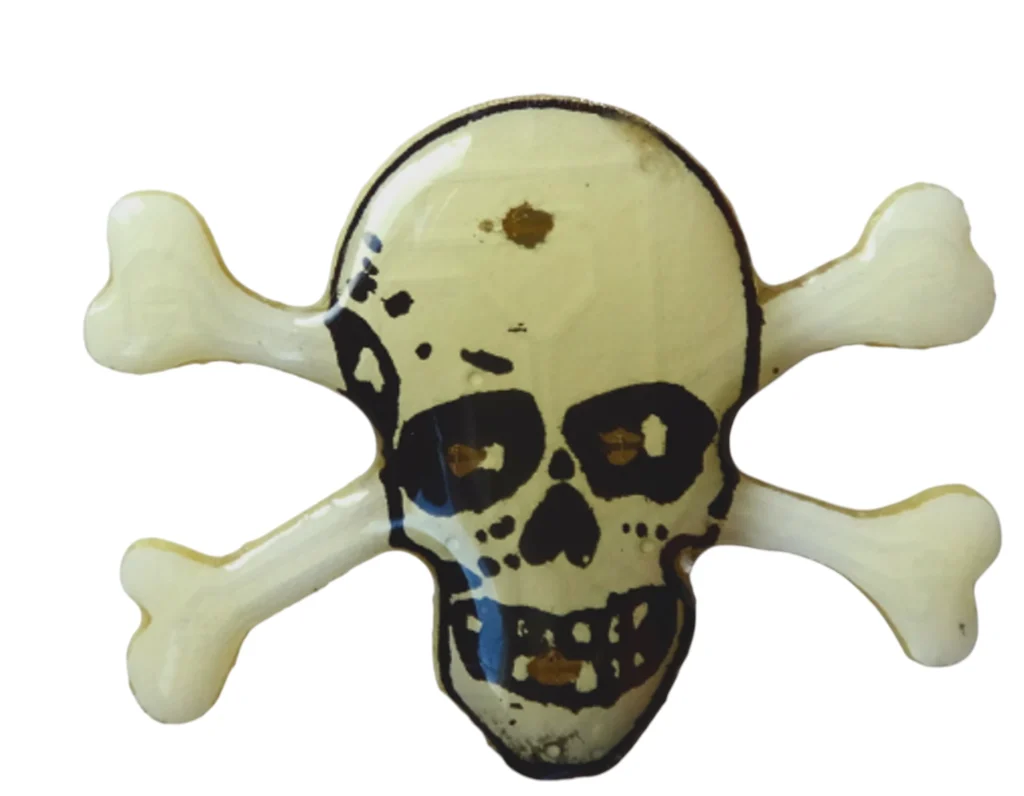
Here is a preliminary list of the various aspects included in this interactive group, followed by the button materials the author has identified in each type. This list is not meant to be complete, but purely representative.
- Bell (metal)
- Compass (wood, metal, acetate filled with liquid)
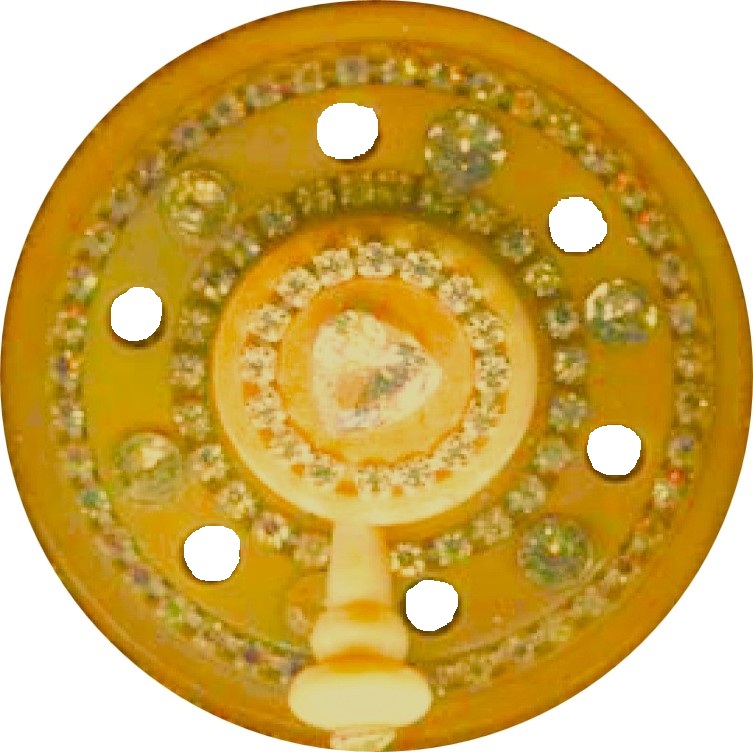
- Dangle (metals, NY, wood, casein, acetate, acrylic, polyester, fabric, bakelite/phenolic resin, aluminum, plaster, ABS, bone, pearl)
- Door knocker (metals, casein, bakelite/phenolic resin, VI, glass mounted in metal)
- Flexible protrusion (body: fabric, wood, casein, bakelite/phenolic resin; protrusion: feather, fur, fabric, beads, hair, leather, cord, wicker, plant parts, beads
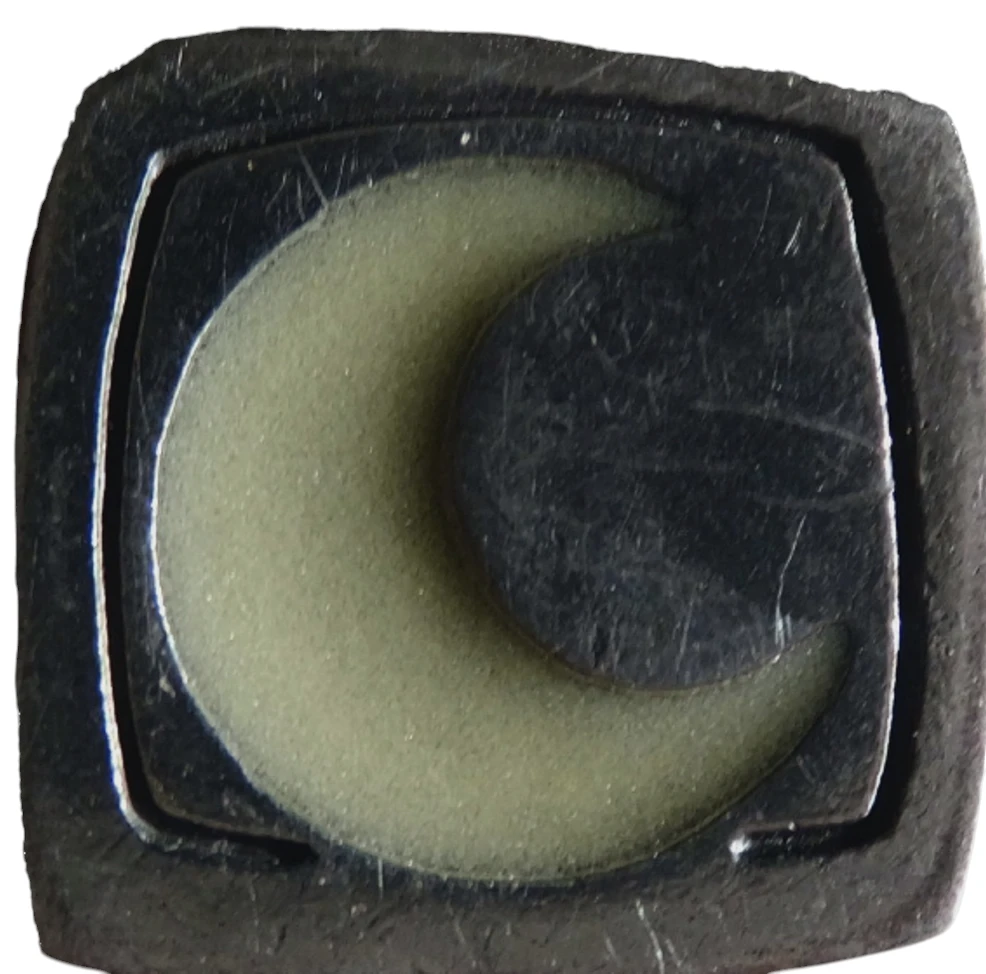
- Glow in dark (PE, acrylic DUP mounted in metal)
- Google eye (wood, nylon, acetate, acrylic, polyester)
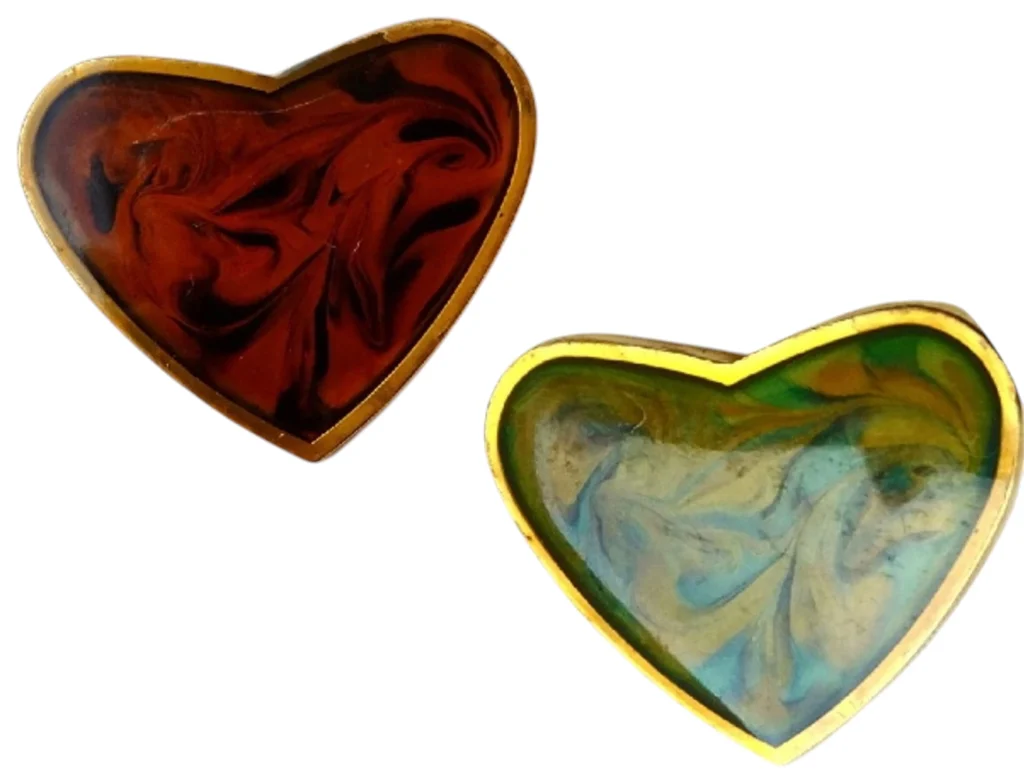
- Image/color change lenticular (acetate, ABS, PE, wood)
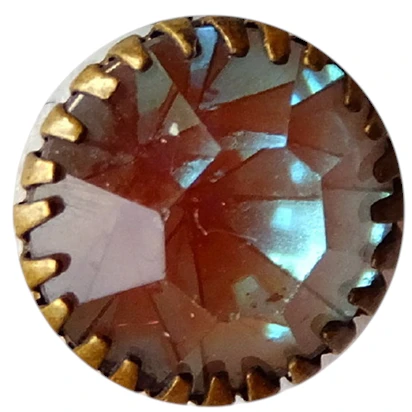
- Iridescent luster that shows definite different colors when tipped back and forth (glass)
- Mechanical/movable miscellaneous
- Abacus beads move (wood, brass, white metal)
- Airplane propeller spins (nylon)
- Arrow lie detector (white metal)
- Balls roll around circular track (nylon)
- Beads in border turn (wood)
- Body moves in middle, giving impression of walking (motating)
- Boy (nylon)
- Charlie Chaplin (modern gilt with cold plastic enamel DF)
- Clothespin opens (wood)
- Dials change date (white metal)
- Expand/contract (white metal)
- Mouse tail wiggles at joints (metal)
- Mouse tail flexible (leather on wood)
- Parts move back and forth in track (nylon)
- Airplane
- Car
- Soccer ball
- Tongue
- Parts can be wiggled (nylon)
- Pull string toy (wood)
- Puzzle, 4 pieces fit together (nylon)
- Racing car wheels turn (nylon, ABS)
- Spur spins on boot (wood)
- Toy w/metal ball moves inside (polystyrene)
- Open/shut – screw or hinge
- Colt rouge/perfume (amino resin)
- Compact (white metal) with powder puff inside
- Locket (gold/gilt, military brass Div. II)
- Smuggler (enameled silver)
- Rattle (casein, polystyrene)
- Screw turns (white metal)
- Tremble (“Gay 90s” glass mounted in metal, nylon, polystyrene )
- Tumble (outer material: metal, acetate, polystyrene, casein; inner material: sand, shells, seeds, plant life, metal shavings, plastic bits)
- Wings open on ladybug (nylon)
- Unlisted miscellaneous
- Brush in Bakelite
- Eraser on Bakelite pencil
- Interchangeable parts (glass, what I call “nestle-togethers”)
- Mirror that can be used as a real lookingglass (casein, NY)
- Springs on bat and pumpkin (polyester)
Since first writing this article, I’ve found many more fun and different examples. I hope you have, too!
It is interesting to note that certain materials lend themselves better to interaction. Metals and plastics seem to predominate, but not celluloids. I’ve found just two celluloids so far, and one is “iffy.” There must be many examples out there yet to be discovered. And, of course, clever button artists can create interactive buttons from many other materials. This is a very fun concept to collect – a new way to “play” with our buttons – so enjoy!
© Jocelyn Howells 2013, 2014, 2026. No part of this article may be reproduced without express permission
from the author. First published in the Oregon State Button Society bulletin.
