

This article may not be reproduced in any form, print or digital, without express written permission from the author, Deborah Allnutt. Copyright 2026.
by Debbie Allnutt 8/6/2026
AI is everywhere these days. Curious as to what it can do, I logged into ChatGPT and asked a question. The answer was so delightful I decided to share it with you. I hope you enjoy.
Every button collector knows the feeling. You open an old tin, cigar box, or velvet-lined drawer intending to organize for “just a few minutes,” only to lose an entire afternoon staring at tiny circles of history.
And if you spend enough time around antique buttons, a curious thing begins to happen—they develop personalities.

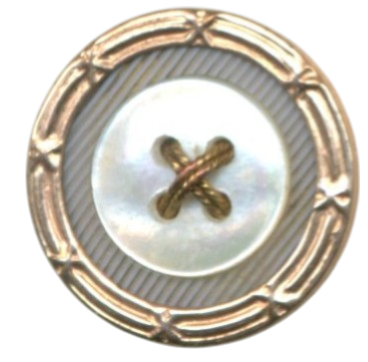
The proud brass military button begins looking slightly offended. The chipped china button seems dramatic. The black glass Victorian appears to be silently judging everyone in the room.
It does not take much imagination before the entire collections starts to sound like a crowded dinner party.
Take, for example, the Cut Steel Button, “Oh, yes, I was extremely popular in 1785. Candlelight practical worshipped me. People entered ballrooms merely to shimmer in my presence. And now? Now I live in a fishing tackle organizer beside three plastic shirt buttons and a Canadian penny.”
Or the weary Victorian Mourning Button, “Please lower your voices. We had standards in the nineteenth century. People mourned with dignity then. None of this ‘celebration of life’ business. We sat quietly in black crepe for two years and stared sadly into fireplaces.”
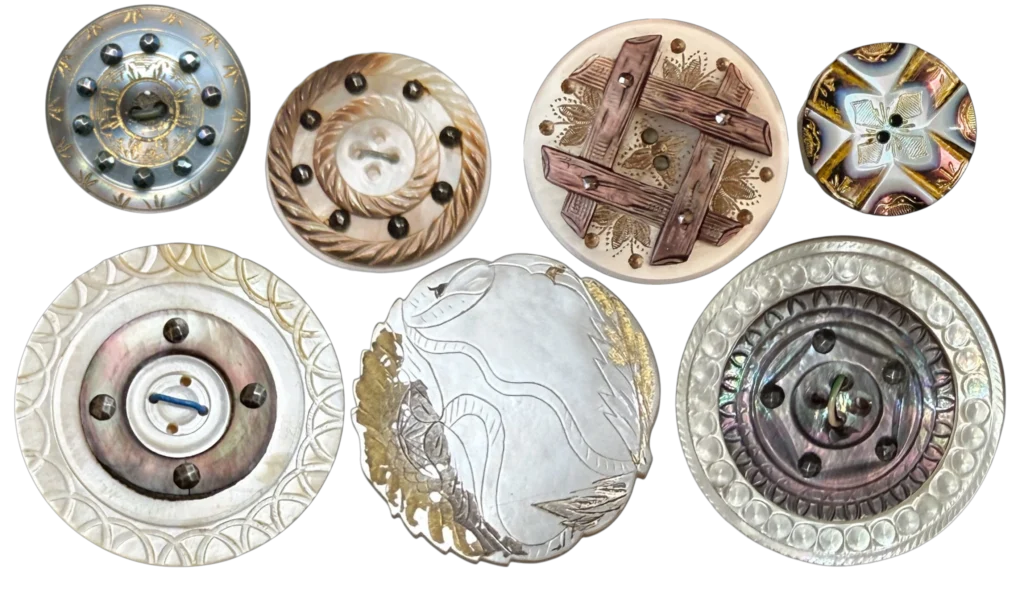
Then there is the eternally smug Mother-of-Pearl Button, “THE SEA. Not a factory. Not a discount craft store. An oyster. Frankly, I should be displayed on velvet at all times.”



“Do not put me near the metal buttons,” says the hand-painted china. “They scratch. They have no respect for artistry. Also Harold, the brass uniform button, uses ‘delicate’ to describe me.”

Brass uniform buttons, meanwhile have their own opinions. “We held civilization together,” they insist. “Railroad, navies, marching bands, postal systems. Meanwhile porcelain over there fainted because someone touched her with a thumbnail.”
And somewhere in every collection sits a mysterious unidentified object no one can date properly. “I am extremely rare,” it whispers dramatically, “or part of a lampshade.”
Collectors themselves are not spared from scrutiny. The buttons have noticed things.
“We see you,” mutters the Bakelite buttons. “Buying another jar because it contained two interesting examples at the bottom.”
“We heard you say you were ‘downsizing,” sneers the black glass buttons. “That was six tins ago.”
And every collector owns at least one button that has become unbearably arrogant after being identified in a reference book.
“Oh, NOW you place me in a display case,” says the eighteenth-century gilt beauty. For twenty years I lived in an envelope with ‘miscellaneous gold thing’ as a label.”
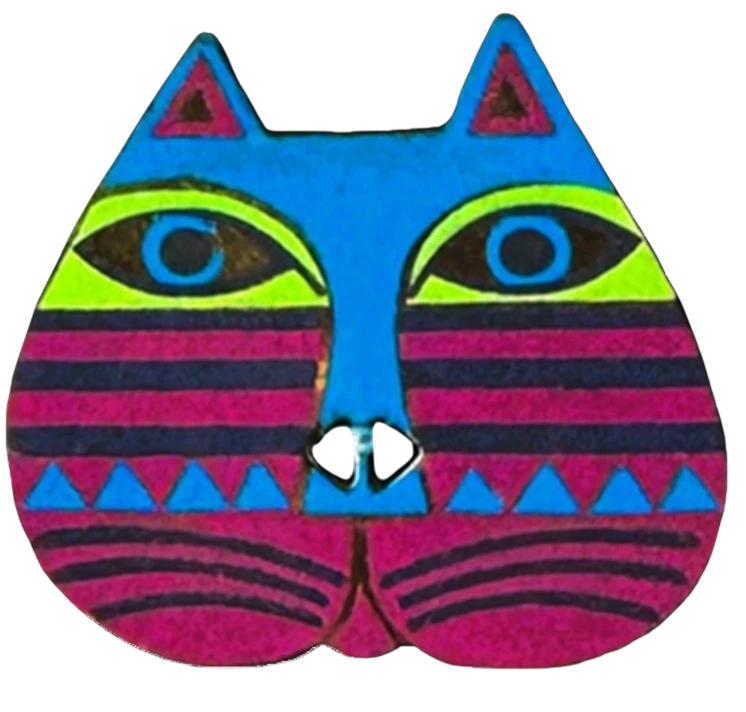
Of course, the noisiest residents of the button box are the novelty buttons.



What lies beneath the humor is part of what makes button collecting so delightful: buttons feel alive. Perhaps this is because they once traveled through real human lives—attached to wedding dresses, uniforms, children’s coats, opera cloaks, work shirts, and Sunday jackets. They were touched daily, polished accidentally, fastened in haste, treasured, repaired, lost, and found again.
Each button carries just enough mystery for the imagination to step in and finish the story.
And maybe that is why collectors keep opening those old tins. Not to simply organize, but to listen. Because between the brass, pearl, china and glass, the buttons are still talking.

This article may not be reproduced in any form, print or digital, without express written permission from the author, Deborah Allnutt. Copyright 2026
